
The Monday Long Player #18
Help/Help(2) - War Child

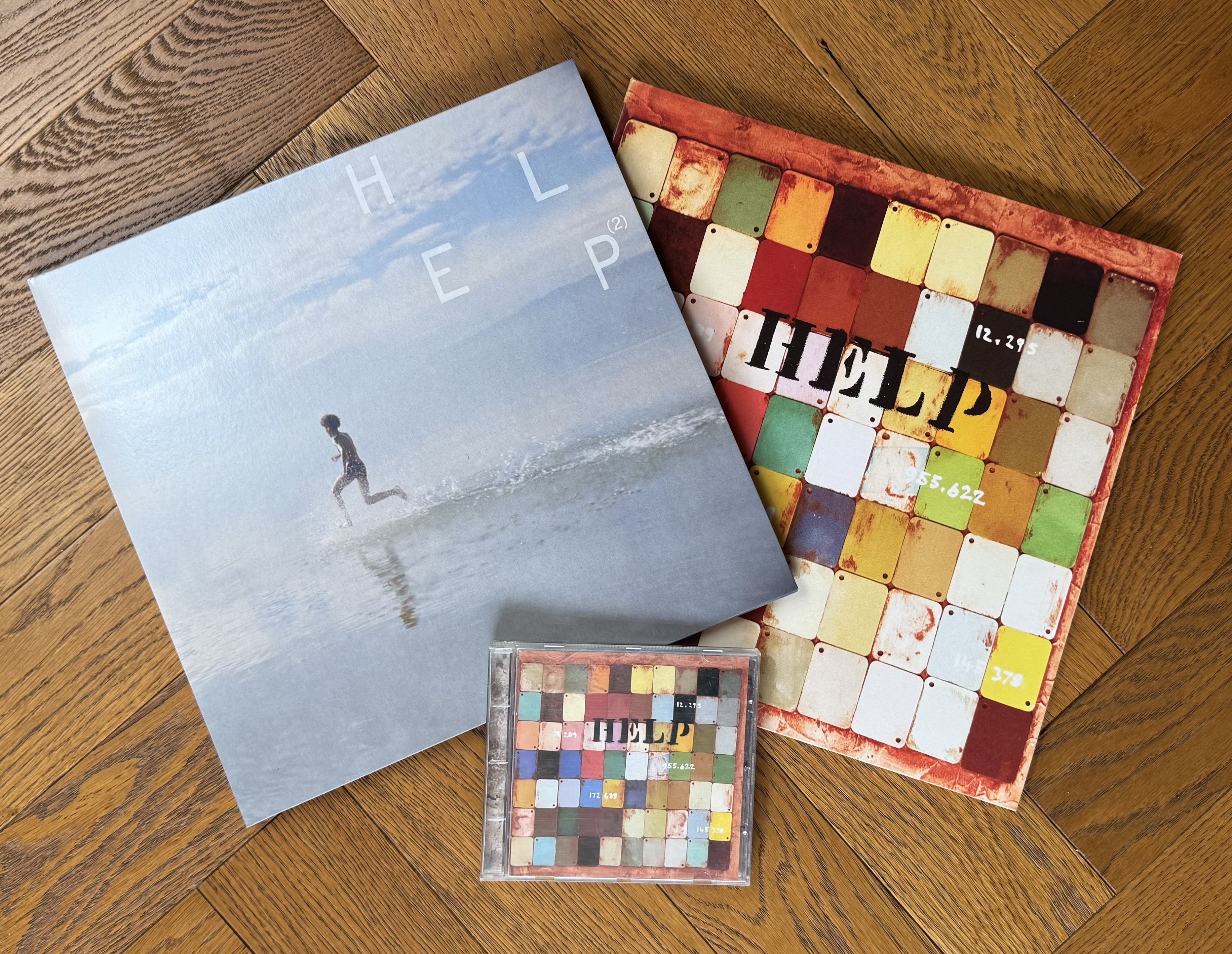
As the more eagle-eyed of you may have noticed, I’ve skipped the last couple of weeks. A combination of work and general despair at the state of the world made doing something as trivial as this feel a little futile. I suppose it’s fitting that I return with a record that is trying to make sense of the desperate situation we find ourselves in right now. It also happens to throw back to some of the 90s nostalgia from my recent posts, as it’s a follow up to a record that originally came out back in 1995.
So first, a bit of back-story: War Child is a charity that was founded in the early 90s by film-makers Bill Leeson, David Wilson and Willemijn Verloop in response to the horrors of the Bosnian War. To this day War Child works on the premise that no child deserves to suffer the consequences of war and seeks to be there for children who need them most, when they need them most. In September 1995, inspired by the concept of John Lennon’s Instant Karma a group of artists came together to record, mix, master, manufacture and release an album in the space of six days. This was a far greater challenge in the 90s than it would be now - my original CD copy didn’t have a tracklist as they had to start the manufacturing before they knew what would be on the album. Music magazines printed the final tracklist in the weeks that followed for you to cut out and insert into the CD afterwards. Brian Eno was one of the driving forces behind the album and still holds the UK charts company responsible for not allowing it to be considered for the official album charts, as it was not a single artist album, a decision that seemed crazy at the time and seems just as incomprehensible now.
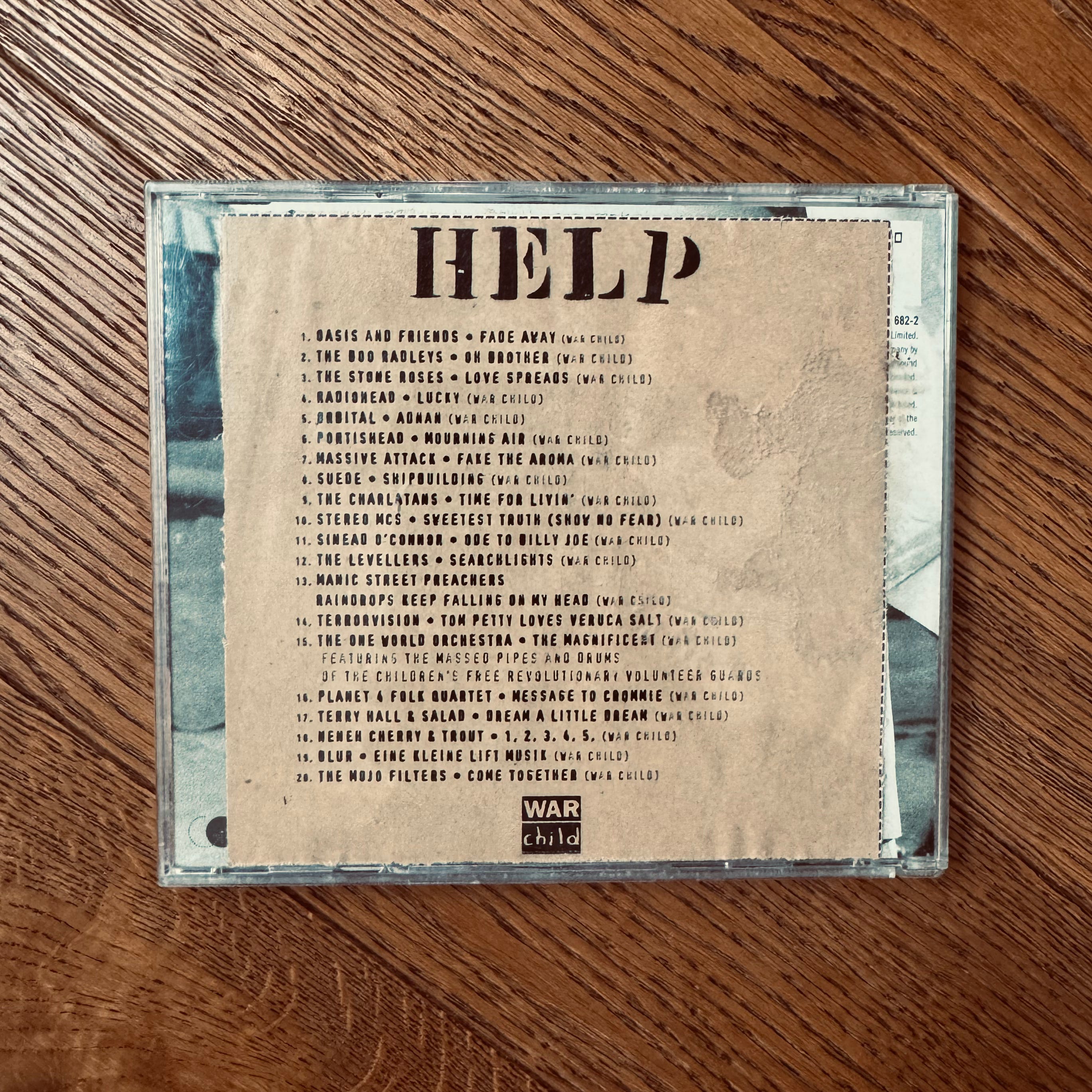
The line-up was a snapshot of 90s British indie music with appearances from Oasis, Radiohead, Suede, The Stone Roses, Portishead, Massive Attack, Blur, The KLF (appearing here as The One World Orchestra and performing a dnb rework of the Theme From The Magnificent Seven), and The Smoking’ Mojo Filters, a supergroup that included Paul McCartney, Paul Weller, Noel Gallagher, Steve Cradock, Steve White and Carleen Anderson, performing a cover of the Beatles Come Together. There was also the first post-Richey Edwards recording from Manic Street Preachers (with a very sweet cover of Raindrops Keep Falling On My Head) and Sinead O’Connor with a brooding take on Bobby Gentry’s Ode To Bille Joe.
As a 17-year old glued to Radio One’s Evening Session and a dedicated reader of NME, Melody Maker, Select and the rest, this was almost the perfect album for me. It launched War Child into the consciousness of millions of music fans around the world and raised around £1.25 million for their work. I can’t remember if there were criticisms at the time, but in hindsight it is of course dominated by white male artists. This is not a huge surprise, as anyone who lived through that era would admit. Aside from Massive Attack and Neneh Cherry there are no people of colour as named artists and there are only four women (two of whom are collaborating with a male artist).
Three and a bit decades later things are mercifully a little different. Help(2) is far more balanced from a gender and race perspective, which is in keeping with the times - no-one is here out of tokenism, and the producers have done a great job in getting some of the biggest artists from the indie community (and beyond) to show up and contribute. From a personal perspective I’m approaching this from a very different angle. Whilst I’m familiar with every name on the album, most of them are artists I know of, rather than know and love. In fairness, a quick run-down of the roster reveals that I own albums by about half of the artists involved, but I think the overall point remains.
I dug into it over the weekend and it’s a great listen. Standouts for me are Damon Albarn’s collab with Grian Chatten and Kae Tempest, Cameron Winter’s claustrophobic Warning and Pulp’s stomping Begging For Change. Top of the tree was the Ezra Collective and Greentea Peng collab Helicopters which is one of my favourite things that either of them have done, and continues the tradition of the original album in pulling together interesting artist pairings.
Whist the record does benefit from a more diverse roster than its predecessor, it does occur to me that in terms of musical diversity it’s not that different. Part of the reason that the Ezra/Greentea track stands out is in its difference to the indie music that makes up most of the record. The OG album had diversions into trip hop (Massive Attack/Portishead/Stereo MCs), drum’n’bass (The One World Orchestra) and dubbed-out electronica (Orbital/Planet 4 Folk Quartet - an Andrew Weatherall alias). On volume two we get Sampha’s alt-RNB and the loping reggae on the aforementioned Ezra/GTP cut, but aside from that it’s indie-rock (of admittedly various stripes) all the way. It’s a melancholy record in the main too, which is understandable given the cause that it’s in aid of. In my mind the first record was a bit more upbeat, but listening back I realise that it’s a few tracks that are doing the heavy-lifting on that score and the overall mood is similar across both records. That said, one of my favourites on the original album was The Charlatans/Chemical Brothers cover of the Sly & The Family Stone cut Time For Livin’ - a choice that might seem inappropriate on first glance but actually ended up anchoring the record with a blast of defiance. I wonder if artists today might have feared an online backlash if they made a similar choice.
Another thought looking back at the original LP is the artists that look somewhat out-of-place from a modern perspective. I doubt that younger readers will be familiar with Salad, Terrorvision or The Levellers, but at the time it made complete sense for them to be included. The latter were absolutely huge in the 90s, headlining Glastonbury in 1994 to an audience of over 300,000 people. I’d not thought of them in years, but a quick google search reveals that they are very much still a going concern, albeit to what I would assume are slightly more modest audiences. It makes me wonder which of the artists on Help(2) we’ll be frantically googling in 30 years time, taking us down internet wormholes to forgotten corners of past fandom.
One thing that does seem depressingly certain is that the work that War Child does will be as vital now as it was in 1995 and continues to be today. If you believe in their mission, go and buy this record; if you want to see a snapshot of indie-leaning music in 2026, go and buy this record; and if you fondly remember the first album’s release all those years ago, go and buy this record. You can pick it up on LP, CD and download over on Bandcamp.
The Monday Long Player is a weekly newsletter from me, Aly Gillani aka Gilla. I’m a radio host, DJ, A&R and writer. I run First Word Records and am the Artist and Label Outreach Lead at Bandcamp. You can listen to my latest radio show on Rinse FM just here, check out my fortnightly Bandcamp Selects show here and buy my zine The Long Player just here. Subscribe to get a weekly write up of a record I’ve been listening to this week as well as news from my musical world.