
10 Things I've Learned From 10 Years At Bandcamp
Looking back on a decade of working at my favourite record store.

Yes, it’s another Substack that starts with an apology for the long gap since my last post. Life/Work/Everything has been a little overwhelming of late and I’ve been working on something a little different to my usual output which accordingly took a little longer to put together.
Last month marked 10 years since I started working full time at Bandcamp. It is, and continues to be a hell of a ride, and I feel very lucky to work at a company with a mission that I believe in. There was an element of luck in how I got the job in the first place; I’ve used Bandcamp to sell music since 2009 and would email in questions and feature suggestions from time to time. Back then, these were often answered by Ethan, CEO and one of the founders of Bandcamp. I’d also send music to Andrew Jervis for coverage on the Bandcamp Weekly, culminating in an interview in 2014 as part of First Word’s tenth birthday celebrations.
Later that year Ethan and Andrew were in London and met with a few friendly labels who were using Bandcamp. Although originally (and still) a DIY site for artists, a lot of labels had hacked together a way to present their catalogue on BC, and the developer team had built a way to make this functionality more official. A couple of us tested the process of converting our regular accounts into the new label accounts and got a free subscription for our troubles.
Around this time I was in need of work - I’d been helping my Mum with her business, which came to an end, and with two young children I was looking for something to lighten my need to be DJing three nights a week. During an ultimately failed interview for a job at a distributor, I realised that although that job seemed interesting, I’d rather be doing something similar at Bandcamp. When I got home I emailed Andrew and Ethan and asked if I could work for them….and they said yes. I started on a three-month 2-day a week contract, with the simple job of signing up labels for Bandcamp accounts.
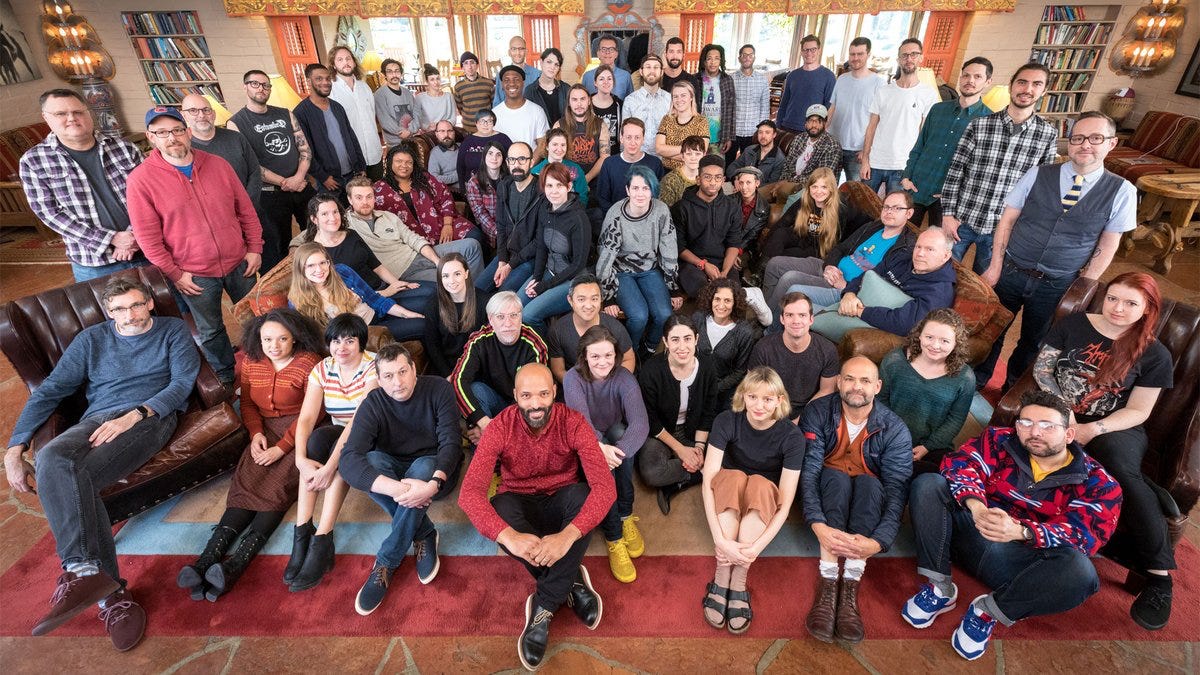
Three months became six, which became nine and as 2015 came to a close I decided to try and make this freelance gig something a bit more permanent. I invented a reason that I’d be on the West Coast (where the team was based) and arranged to meet them in person while I was in town. Seeing them was the only reason I was making the 11 hour flight to San Francisco, but for some reason I felt I needed a ‘cover story’ for my trip. After a brief catch up in a coffee shop in the Mission I headed back to London with the new title of UK Label Representative and the rest is history.
To mark this personal milestone here are then things I’ve learnt over the past decade. I hope you find it interesting…
If you show artists that you value them, they’ll value you right back.
Bandcamp is at its heart a tech company, and the technology it’s built on is very good. That said it’s the ideas and concepts behind it that have maintained the loyalty and love that users have for Bandcamp. Bandcamp Friday is the obvious example here; not only was it a good idea in its own right, but it underlined what Bandcamp was all about in the first place. If you want the artists you love to be able to continue making the music you love, you need to pay them; Bandcamp is, and always has been about that at it’s core. Recognising and acknowledging that art and artists intrinsically have value has served us well, particularly at a time when that seems to be something that others are less ready to commit to.
Innovation isn’t dead - new music forms are being created all the time.
I’d always considered myself relatively knowledgable about music, but working at Bandcamp has made me realise how little I know. The sub-genres of sub-genres that have been birthed, nurtured and developed through Bandcamp are a constant source of amazement to me. Whether it’s Dungeon Synth or Extratone or Mexican Rave - everyone can find their tribe, and the Bandcamp audience is always ready to find their new favourite band. Our Scene Report feature is a constant source of inspiration.
The details matter. Even if they are just for fun.
This was something that the many developers, designers, engineers and product managers at Bandcamp have taught me over the years. Details are important - and if you skimp on them it’s going to show. I love that you can play defender on your stats page, or that there are easter eggs for those that enter $4.20 or $6.66 as a price for a track or album (give it a try!) Those details might seem trivial but they actually speak to a thoroughness and intentionality that creates a product that people genuinely love.
There are infinite ways of running an independent record label.
The early days of my job consisted of travelling around London, visiting labels and pitching the idea of Bandcamp to them. I learnt a lot in that time, from the profound to the more prosaic: for example, you could tell how old a label was by where their office was (West London = very old, North London = quite old, East London = new-ish, South London = brand new). More interesting to me was how varied the businesses were. There is no blueprint for starting a label - it’s often enthusiasts that had a good enough ear or just enough luck to make it through the first error-strewn releases that can turn a hobby into a viable business. Even in these more homogenised times, the models are incredibly varied. From Daupe to Habibi Funk to Cloudcore to Twisted to AD93, the rule is that there are no rules. That the same job can be done in so many different ways is something I really love about the independent music scene. It’s something we need to protect and nurture at all costs.


Politics and music are connected in more ways than we think.
Bandcamp has hosted a lot of fundraisers, campaigns and charity releases over the years, particularly through the early Bandcamp Friday era. Beyond that though, politics impacts my job every day. Brexit, tariffs and boycotts are daily considerations for labels big and small. Brexit in particular has made shipping records immeasurably harder and the vagaries of EU law and its application are a far bigger part of my day-to-day work than I would have imagined.
Smart artists understand that merch isn’t just a way to make money, it’s how you build the world around your music.
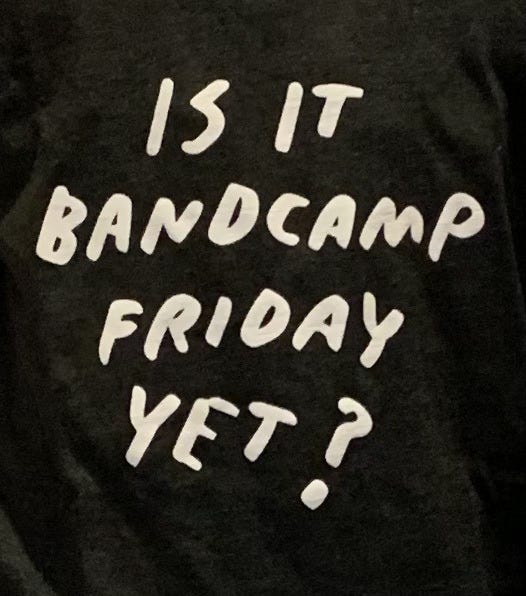
Selling merch is around half of our business at Bandcamp, and as such I’ve spent much of the last decade talking about taxes, parcel size guidelines and which mailers are the most sturdy for international postage. Merch is clearly a good way to make money, but it’s also a big part of building a connection with an audience. I’ve seen some wild items for sale on Bandcamp over the years, from Russian burner phones to Christmas Crackers to Very Boring Rocks. Some of the best were the simplest - an artist who sold postcards pre-filled with her PO Box address that she encouraged fans to send to her. In return she’d write back to them. Imagine getting a postcard from your favourite artist? That’s going to last a lot longer than yet another tote bag. Sometimes artists can just capture the zeitgeist in a way that goes way beyond their audience, like this recent t-shirt from Gay Meat.
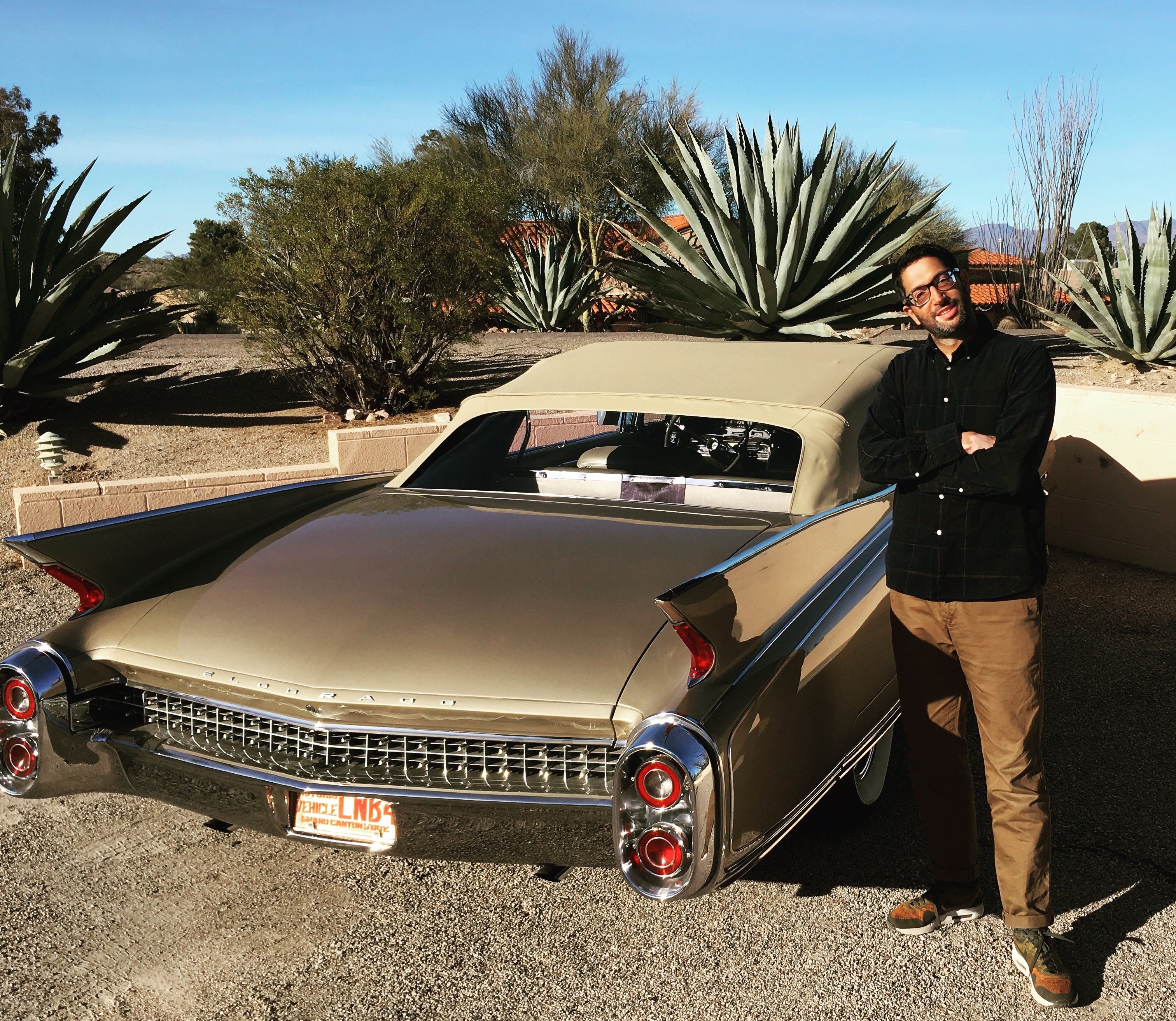
Most people don’t know the difference between a diamond and a rhombus.
Our logo is a rhombus.
We could all learn something from MySpace.
A friend once told me that Bandcamp was essentially MySpace that you could make money from, and I honestly can’t think of a better compliment. MySpace may have birthed much of the modern internet, but few of our current tech overlords seem to understand what made it special. It was fun, personalisable and fostered genuine connection. Its founder didn’t become a fascist, but instead taught us all basic HTML before selling up and spending his time travelling the world and taking photos. For many of us Tom was our first friend on the internet and he’s probably the one who let us down the least too. Anything that we can do to continue that legacy is good with me.
Music fans love hearing from artists directly.
Fans don’t want to hear from a platform, they want to hear from artists, and the best thing a platform can do is get the hell out of the way. The most successful artists use Bandcamp not just to sell music and merch to fans, but to engage with them and build a genuine community around their music through artist messaging and listening parties.
Real music fans’ record collections are fascinating
Here’s a fun experiment: go to any Bandcamp page and click on one of the thumbnails under the album cover. You’ll be taken to a Bandcamp fan collection. They are frequently weird and seemingly make little sense, at least in a way that modern recommendation algorithms would understand. Human recommendation will always hold more interest to me than any more ‘optimised’ forms - music fans’ tastes are messy, unusual and unique, and I love them for it.
So there you have it, 10 barely structured lessons from 10 years working at my favourite music store.
I’ll be back with more regular programming soon. Till then….
Gilla x
The Monday Long Player is a weekly newsletter from me, Aly Gillani aka Gilla. I’m a radio host, DJ, A&R and writer. I run First Word Records and am the Artist and Label Outreach Lead at Bandcamp. You can listen to my latest radio show on Rinse FM just here, check out my fortnightly Bandcamp Selects show here and buy my zine The Long Player just here. Subscribe to get a weekly write up of a record I’ve been listening to as well as news from my musical world.
I started sharing my music on Bandcamp in 2009 as well and I recognise another person in your staff photo! Ben Walker is a lovely chap.
Thanks for this excellent piece. Huge Bandcamp fan here, I think a lot of people don’t remember or weren’t around when it was impossible to sell your songs directly to fans. I owe a lot to Bandcamp!
As you’re the artist lead are you the person I can contact to ask questions about this new royalty stuff? I emailed help months ago and got nowhere.
Never understood why Bandcamp doesn’t offer something other than PayPal for artist payouts. ACH, someday, please…